
*Please keep your phone line open, and we will call you back within 24 hours on business days!
Please keep your phone line open. We will call you back within 24 hours on business days!

WeChat inquiry
News Center
Get the latest updates on exhibitions under Qishun Exhibition and stay informed about events relevant to you.
How to Plan Immigrant Real Estate in a Coordinated manner? The 2026 Shanghai Immigrant Real Estate Expo will provide reference for family planning on November 20th
2026-09-07 08:40:57
Click:
“
From November 20th to 22nd, 2026, the Overseas Immigrant Study and Property Expo, as well as the Enterprise Overseas Development and Financial Services Expo, will be held at the Shanghai World Trade Exhibition Center. Immigration agencies and real estate projects will hold exhibitions at the same venue, and you can consult face-to-face about identity planning, real estate, and financial arrangements. It is expected to receive about 8000 professional visitors in three days. Exhibition hotline 136
”
The child plans to study abroad next year, and the family is also considering settling in a house overseas. Which should be the first choice between identity and real estate? 'Such questions were repeatedly raised at the consultation desk of previous exhibitions. Immigration and home ownership are often two parts of the same family plan, but they are often handled separately. This expo has two major sections: immigration and real estate. It will be held at the Shanghai World Trade Exhibition Center from November 20th to 22nd, in order to facilitate families to ask these two questions together. It should be noted that there is no standard answer for this type of question, but the order of answers will affect the overall arrangement of the family in the future.

1、 Why immigration and home ownership are often considered together
For many families, there is a natural correlation between identity and property: obtaining residency status means convenience in living, studying, and residing in a certain country; The choice of real estate is directly related to the residential area, educational facilities, and cost of living. Two decisions affect each other, and doing them separately often leads to situations where 'the identity is good, but the house is not suitable' or 'the house is good, but the identity is not feasible'.
At the same time, funding arrangements run through two stages. How to export the funds for purchasing a house, how to handle exchange rates, and how to declare taxes all require financial and tax service support. This also explains why more and more families tend to coordinate their identity, property, education, and financial arrangements in one place.
Taking two types of families as examples: educational families usually first determine the target country and city, and then choose real estate based on the surrounding area of the school; Elderly families place greater emphasis on climate, healthcare, and convenient living, with property choices centered around long-term residency. Different needs lead to different priorities for identity and property ownership, but one thing is common - both sides need to have synchronized information.
2、 Three common paths: identity first, property first, or synchronous promotion
The actual situation of the family is different, and the path selection is also different. Families who apply for identity first usually hope to first address the issues of settlement and transportation, and then calmly choose their residential area and property to avoid hasty decisions; Families who purchase real estate first are often familiar with the target area and hope to first identify their desired property before evaluating their identity arrangements; Some families also choose to promote it synchronously, with identity counseling and property inspection conducted simultaneously, and information from both sides being cross referenced.
There are advantages and disadvantages to each of the three paths, and there is no universal order. The key lies in two points: first, clear goals, identifying the problems that identity and property need to solve; The second is information synchronization. The latest policies and market conditions on both sides should be grasped simultaneously, otherwise it is easy to have a passive situation where one side is successful while the other side is not.
3、 New changes in 2026: Path needs to be reassessed
In the past, some families chose the 'housing immigration' program, hoping to solve their identity and property issues in one go. With the adjustment of related projects in multiple European countries, such channels have significantly decreased. Nowadays, identity planning and property planning need to be evaluated separately: first determine the goals and feasibility of identity needs, then choose properties based on actual living plans, and finally arrange funds uniformly.
Policies are changing, and the threshold, duration, and cost of projects are also changing. The old information obtained through the internet may no longer be applicable. Face to face verification of the latest conditions with institutions has become a necessary step in family planning.
4、 How does the expo answer these questions
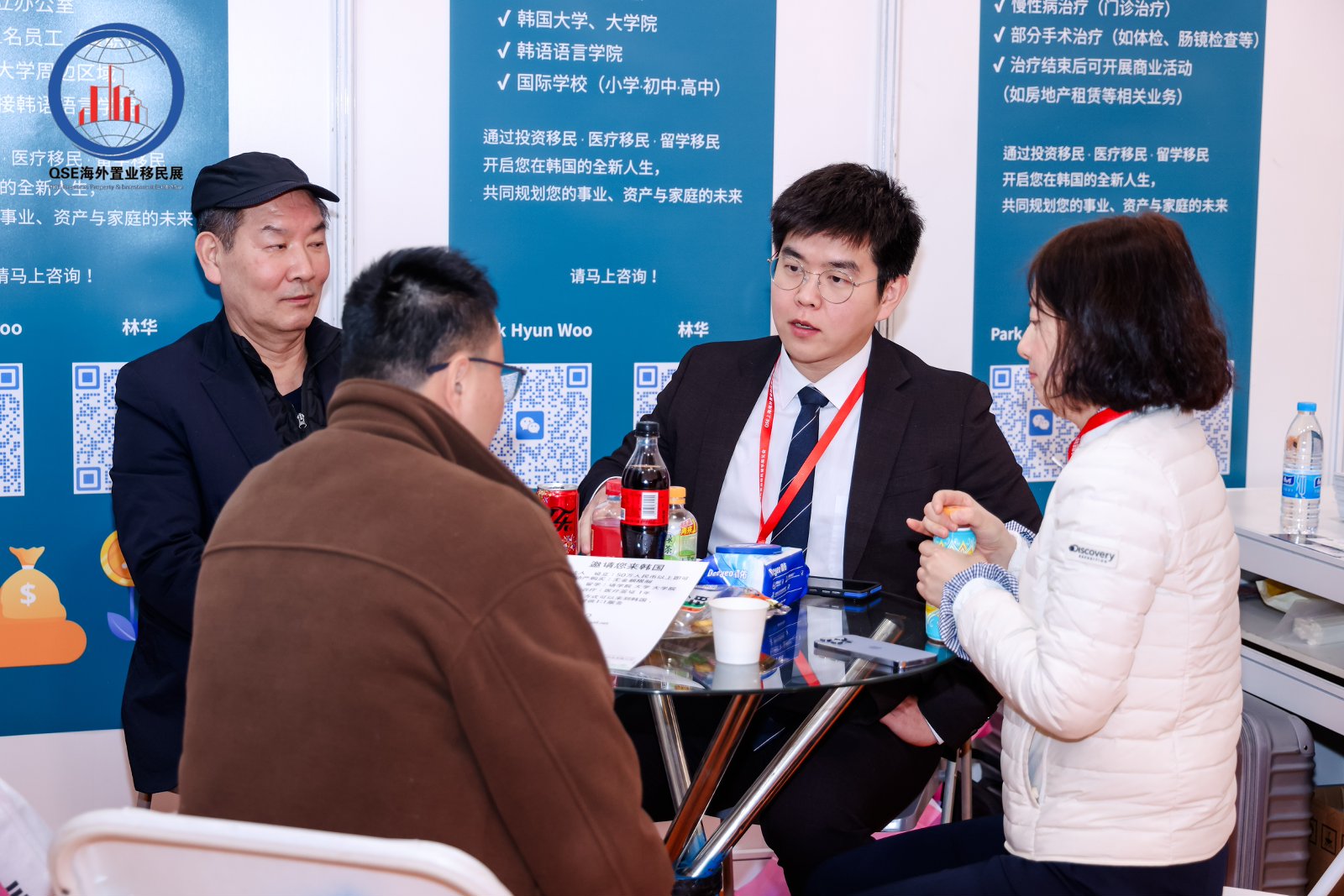
The immigration and real estate sectors of this expo will be held simultaneously, with immigration agencies, law firms, and real estate project parties exhibiting at the same venue. Families can first clarify the conditions for identity planning on site, and then understand the real estate market, regional selection, and transaction process of the target country, seamlessly connecting the two stages.
On site, financial and tax service resources are also gathered for consultation on issues such as fund outflow, foreign exchange arrangements, and tax structure. The three-day exhibition is expected to receive about 8000 professional visitors, with a high density of one-on-one communication, suitable for families to make multiple rounds of comparisons and verify the statements of different institutions together.
It is recommended that families first sort out their basic demands before visiting, such as the city they plan to live in, their child's enrollment time, and budget range. Then, list the two issues of identity and property ownership separately, and confirm them item by item according to the list during consultation, which will be much more efficient.
5、 What can participating organizations and project parties obtain
For immigration agencies and real estate project parties, the value brought by exhibitions is first reflected in the matching of customer groups. Most of the families present are concerned about both identity and property, with clear consultation intentions and more opportunities for cross sector cooperation: immigration agencies can recommend clients with property needs to property owners, and property owners can also connect clients with identity needs to immigration agencies to form business complementarity.
The extension period is three days, and the institution has sufficient time to have in-depth communication with potential families. For families that require a longer decision-making cycle, establishing contacts on-site and providing follow-up services after the meeting are often important ways for exhibiting organizations to obtain effective customers. For institutions, cross sector collaboration is the added value of exhibiting: on-site cooperation with financial, study abroad, and other institutions can not only enrich their own service content, but also provide customers with more complete solutions.
6、 Three suggestions for families
Firstly, prioritize the needs and clarify what issues each identity and property need to address; Secondly, verify separately and evaluate the feasibility and cost of the two paths using the latest policies; The third is to make unified arrangements, considering funds, taxes, and time cycles in a holistic plan to avoid neglecting one aspect. In case of inconsistent statements, official documents and written explanations from institutions shall prevail, and if necessary, multiple comparisons shall be made.
7、 Exhibition Information
The Overseas Immigrant Study and Property Expo, as well as the Enterprise Overseas Development and Financial Services Expo, will be held from November 20 to 22, 2026 at the Shanghai World Trade Exhibition Center for three days, with an expected reception of about 8000 professional visitors. Exhibition hotline: 13681692751 (same as WeChat); Official website: www.qs-expo.com. Welcome families and relevant institutions with immigration property planning needs to come and exchange ideas.
Author:
Shanghai Enterprise Go-Global & Cross-Border Coope










Connecting Global Opportunities · Empowering Enterprises to Go Global
Contact Us
Tel: +86 136 8169 2751
Email: expo@qs-expo.com
Address: Room 512, Building 1, Fox Business Mansion, No. 89 Huguang East Road, Minhang District, Shanghai




Invitation Letter
Copyright © 2009-2026 Shanghai Qishun Exhibition Service Co., Ltd. All Rights Reserved | Shanghai ICP Filing No. 20266666-1

