
*Please keep your phone line open, and we will call you back within 24 hours on business days!
Please keep your phone line open. We will call you back within 24 hours on business days!

WeChat inquiry
News Center
Get the latest updates on exhibitions under Qishun Exhibition and stay informed about events relevant to you.
The intensive adjustment of global immigration policies in 2026 will kick off on November 20th at the Shanghai Immigration Expo, where multi country projects can be compared at the same time
2026-09-07 08:27:34
Click:
“
From November 20th to 22nd, 2026, the Overseas Immigrant Study and Property Expo, as well as the Enterprise Overseas Development and Financial Services Expo, will be held at the Shanghai World Trade Exhibition Center. It will bring together immigration agencies and legal service agencies from multiple countries for face-to-face consultation on the latest immigration policies and project conditions. It is expected to receive about 8000 professional visitors in three days. Exhibition hotline 13681
”
Since 2026, global investment immigration policies have entered a period of intensive adjustment. According to public reports, Portugal has adjusted its citizenship regulations, Spain has closed its investor visa channel, Latvia announced the closure of its home purchase immigration program from September 2026, and Malta has terminated its investment citizenship program; At the same time, Greece has adjusted investment thresholds in some regions and optimized approval processes, Cyprus retains the channel for obtaining permanent residency through investment, Kazakhstan plans to launch a 'golden visa', and countries such as the United Arab Emirates and Saudi Arabia are expanding long-term residency arrangements. Policies are flexible and market information is frequently updated. For families who are interested in identity planning, it is more important than ever to timely and accurately grasp the latest conditions.

1、 Policy reshuffle, identity planning enters the stage of 'fine comparison'
In the past, many families viewed 'homebuying immigration' as a relatively simple path. With the adjustment of related projects in multiple European countries, such channels have significantly decreased, and the threshold and requirements are also changing. The immigration market is not closed down as a whole, but there is a clear differentiation: some countries tighten, some countries optimize their processes, and some countries open new channels. This means that choosing which country and through which path, it is necessary to verify the latest policies item by item, rather than using old information from a few years ago.
From the demand side, the motivation for families to handle immigration is concentrated in areas such as children's education, convenient housing and travel, tax arrangements, and asset allocation. A single project often cannot cover all demands, and more and more families are comparing solutions from multiple countries at the same time, and then combining budget, cycle, and life planning to make combined judgments.
From the perspective of family types, there are also different focuses on demand: families with children's education as the main motivation pay more attention to education quality, academic paths, and accompanying arrangements; Families considering retirement and daily life place greater emphasis on climate, healthcare, living costs, and the local Chinese community; Families that prioritize convenient transportation and asset allocation are more concerned about project conditions, cycles, and subsequent maintenance costs. Putting one's own needs first and comparing them with policies in different countries will make the thinking clearer.
2、 Common Misconception: Treating 'Processing' as the 'End Point'
A common misconception in identity planning is that the application is approved and considered completed. In fact, many projects have follow-up requirements for residence time, renewal conditions, tax declaration, and the connection of children's education and the arrangement of living in two places also need to be considered in advance. Whether the institution provides continuous follow-up services, whether the process is transparent, and whether the fees are clear are all important considerations when making a choice.
Related to this is the timeliness of information. Policy adjustments often come with a window period, and old articles and statements on the internet may no longer be applicable. Instead of relying on fragmented information, it is better to verify with the institution in person and request them to provide official documents or written explanations before making a judgment.
3、 How to reduce information gap in expos
This year's expo features an immigration section, bringing together immigration agencies, law firms, and project parties from multiple countries and regions. Viewers can have face-to-face consultations with institutions within the same venue regarding the application requirements, processing cycles, fee structures, and follow-up requirements of different countries, and directly verify policy details to reduce the difficulties caused by inconsistent online information channels. The types of institutions cover consultation, legal, tax, and follow-up services, and families can choose corresponding communication partners according to their own situation. When consulting, it is recommended to prepare basic information about the family in advance, such as the age of children, planned residence time, budget range, etc., so that institutions can provide more targeted explanations and facilitate horizontal comparisons between different institutions.
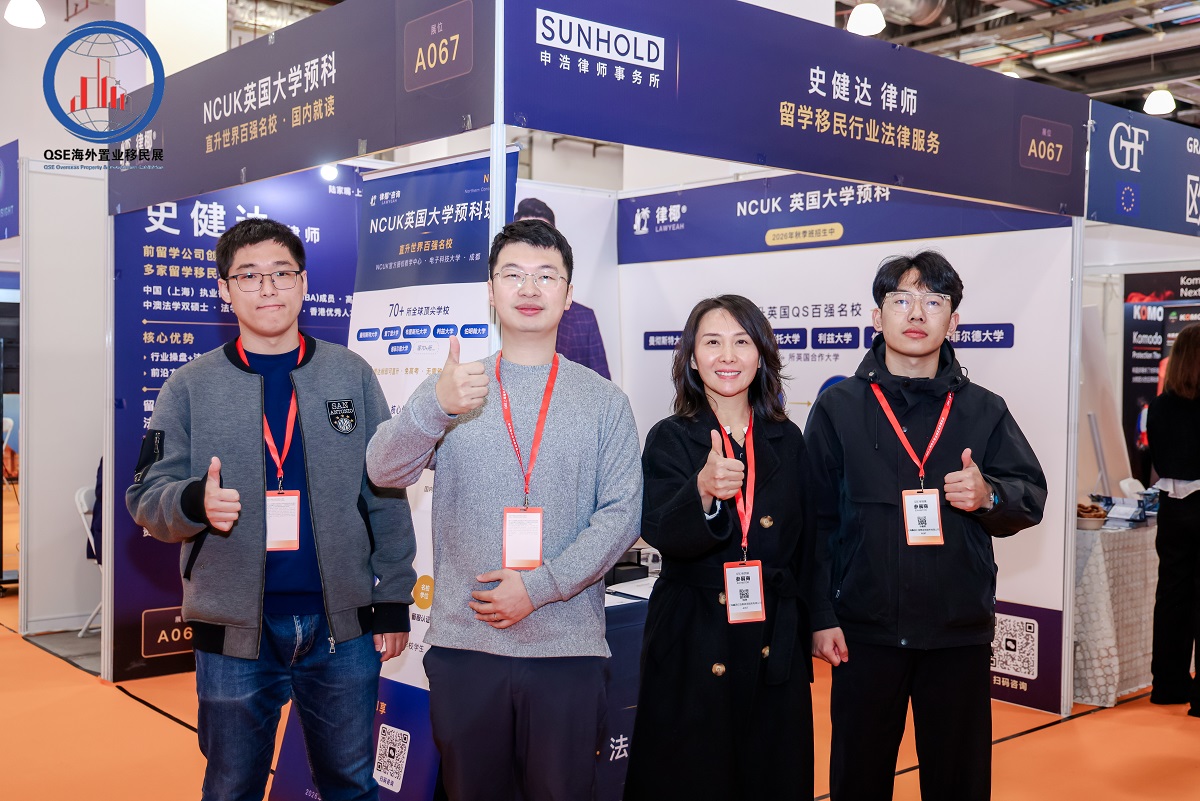
At the same time as the exhibition, the immigration, study abroad, real estate, financial services and other sectors are interconnected. For families who need to consider 'identity+education+real estate+funds' comprehensively, multiple rounds of comparison can be completed in one trip. The three-day exhibition is expected to receive about 8000 professional visitors, with one-on-one communication as the main mode of communication and sufficient consultation.
4、 What can participating organizations obtain
For immigration service agencies, exhibitions provide opportunities for concentrated contact with target customer groups. The audience present is mostly individuals and families with clear planning intentions, and on-site communication can directly enter the stage of understanding needs and explaining solutions. The exhibition lasts for three days, and the organization has sufficient time to establish contact with potential customers and follow up on the follow-up.
At the same time, exhibiting is also a window for institutions to showcase their professional abilities and team backgrounds. In the presence of numerous institutions, the completeness of service content, transparency of cases, and professionalism of communication will directly affect the audience's trust choices. Business exchanges with peers during the exhibition period are also valuable, as they help institutions understand market trends, adjust service structures, and establish cooperation with law firms, tax, real estate, and other institutions to provide customers with a more complete service chain. For overseas institutions that have just entered the Chinese market, exhibitions are also a starting point for understanding local needs and establishing market awareness. Through on-site communication, they can quickly grasp common issues of concern to potential families.
5、 Four suggestions for visitors
Firstly, clarify the goals and prioritize the needs for education, housing, transportation, taxation, etc., and then consult with questions; The second is to ask for more details, focusing on understanding the application conditions, cycle, cost composition, and renewal requirements. If necessary, please ask the institution to provide a written explanation; Thirdly, pay attention to the timeliness of policies, and try to use official documents as much as possible to obtain information on site. Important matters should be verified again; The fourth is to consider identity planning in the overall arrangement of the family, and evaluate it together with education, property, and financial arrangements to avoid single point decision-making.
6、 Exhibition Information
The Overseas Immigrant Study and Property Expo, as well as the Enterprise Overseas Development and Financial Services Expo, will be held from November 20 to 22, 2026 at the Shanghai World Trade Exhibition Center for three days, with an expected reception of about 8000 professional visitors. Exhibition hotline: 13681692751 (same as WeChat); Official website: www.qs-expo.com. Welcome families and related service agencies with identity planning needs to come and exchange ideas
Author:
Shanghai Enterprise Go-Global & Cross-Border Coope










Connecting Global Opportunities · Empowering Enterprises to Go Global
Contact Us
Tel: +86 136 8169 2751
Email: expo@qs-expo.com
Address: Room 512, Building 1, Fox Business Mansion, No. 89 Huguang East Road, Minhang District, Shanghai




Invitation Letter
Copyright © 2009-2026 Shanghai Qishun Exhibition Service Co., Ltd. All Rights Reserved | Shanghai ICP Filing No. 20266666-1

